 Pueblo Swamp Cooler Repair
 Fall Swamp Cooler Shutdown and Winterization in Pueblo
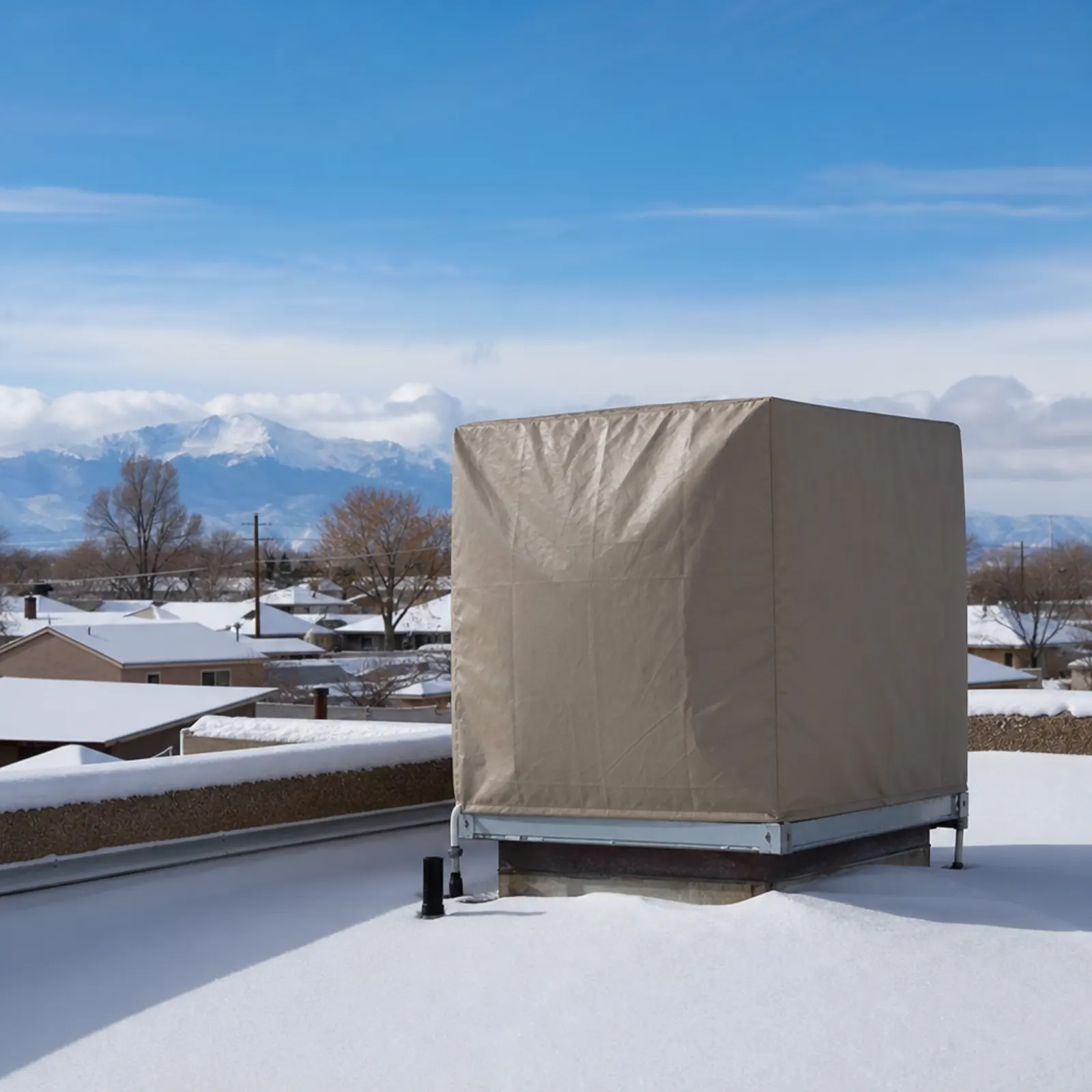
A fall swamp cooler shutdown in Pueblo runs $100 to $200 and covers the whole winterization: water shut off at the source, the supply line and pan drained, pads removed or dried, the cover fitted, and the duct damper sealed so winter air stays out of the house. It needs to happen before NWS Pueblo’s mean first fall freeze of October 8, and it is the single cheapest thing on the pricing page because it prevents the single most common spring repair: a split water line and cracked pump from a cooler left full into a freeze.
The freeze is not optional here
Pueblo’s fall turns fast. NWS Pueblo’s climate records for the airport put the mean first fall freeze at October 8, with a 50 percent chance of the first 32 degree night by October 5 and a 90 percent chance by October 20. The 28 degree hard-freeze dates, the ones that split a full line, run October 13 at 50 percent and October 27 at 90 percent. The earliest first freeze on record is September 9, and it happened twice, in 2001 and 2020. Last year’s first freeze came October 19, 2025, and it was a hard one at 27 degrees.
At the same time, September is still warm: NOAA’s 1991-2020 normals give Pueblo a September normal high of 83.1 degrees. So the shutdown window is a squeeze between the last week you want the cooler and the first night that will break it, and the honest booking advice is late September, or the first days of October with an eye on the forecast. Colorado City sits at roughly 5,853 feet and Cañon City at 5,351, and the higher towns in the service area should be drained first.
What a shutdown includes
- Water off at the source. The valve at the hose bib or the saddle tap, not just the float. Then the line is opened at the top and bottom and blown or drained so nothing sits in the run up the wall and across the roof.
- Pan drained and dried. The drain plug pulled, the pan wiped or sponged dry, and the last of the scale scraped out while it is soft. Standing water is what freezes and works the pan seams open.
- Pump and float. The pump lifted, drained, and set back dry; the float checked for scale and left in the closed position. A pump that struggled all September gets flagged now so it can be replaced at the spring start-up instead of failing in June.
- Pads out. Aspen pads come out and go in the trash; a season of Pueblo Water’s 10.5 grain hardness has turned them to crusted cardboard. Rigid media pads are rinsed, dried, and either stored or left in place dry.
- Motor and belt. Belt tension backed off so it does not take a set over the winter, and the bearings given a last drop of oil. A quick look at the motor leads and the cooler’s own control while the panels are off.
- Cover on. A fitted cover keeps snow, wind-blown grit, and the spring dust storms out of the pan and off the blower. Pueblo West and the county edges get the worst of the wind; a loose cover is a torn cover by March.
- Damper sealed. The down-duct damper closed and sealed from inside, or an insulated ceiling-vent cover fitted, so the cooler duct is not a chimney pulling heated air out of the house all winter. On a house with both a cooler and a furnace this is the step that shows up on the gas bill.
- Inside the house. The cooler switch or thermostat set to off, and the window relief you used all summer closed and latched.
Why the damper step matters in Pueblo
Pueblo winters are cold and long. NOAA’s normals give the city about 165 nights a year at or below 32 degrees, and every one of those nights an unsealed cooler duct is a hole in the ceiling that heated air rises through. The duct connects the warm house to a cold metal box on the roof, and the draft runs all night. Sealing it from inside, with the damper closed and a gasketed cover over the ceiling grille, is a five-minute step that a lot of do-it-yourself shutdowns skip. On the mid-century ranches of Belmont, Sunset Park, and Eastwood Heights, where a single down-draft cooler feeds a hallway grille, it is the difference a family can feel in the hall in January.
The do-it-yourself version, honestly
Plenty of Pueblo homeowners winterize their own cooler, and the steps above are the checklist. The places people go wrong: shutting the float but leaving the line full, which is the split-line failure; draining the pan but leaving wet aspen pads against it; and forgetting the damper. If you do it yourself, the line is the one that costs money. Open it at both ends and make sure it is empty before the first forecast freeze.
Where the paid shutdown earns its $100 to $200: two-story Pueblo West homes and steep Mesa Junction roofs where the ladder is the hard part, coolers on a curb that need the cover strapped against the wind, and any cooler you suspect had a bad season, because we will find the failing pump or scaled float now and schedule the part for April.
Book it with the start-up
A shutdown in October and a start-up in April as a package runs $200 to $400, and it puts your cooler on a calendar instead of a crisis. When we drain it, we know what it needs in spring; when we start it, we know it was drained. Over a few seasons that is the difference between a cooler that lasts and one that gets replaced early. The pads, pumps, floats, and motors page explains what the seasonal visits are protecting.
What it costs
| Item | Range |
|---|---|
| Fall shutdown and winterization | $100 to $200 |
| Start-up + shutdown package | $200 to $400 |
| Cover, if you do not have one | Priced with the visit |
| Insulated ceiling-vent cover | Priced with the visit |
Winterizing is covered across Pueblo and out to Pueblo West, Colorado City, Penrose, Florence, and Cañon City, and the higher, farther towns are the ones to drain first, in the last two weeks of September. If a freeze is in the forecast and you have not booked, say so on the form and ask for the drain first; the cover and damper can wait a week, the line cannot.
Frequently Asked Questions
How much does a swamp cooler shutdown cost in Pueblo?
$100 to $200 for the full winterization: water off at the source, line and pan drained, pads removed or dried, cover fitted, and the duct damper sealed. Booked with a spring start-up the package is $200 to $400. It is the cheapest line on the pricing page and it prevents the most expensive spring repair there is.
When should I winterize in Pueblo?
Before the first freeze. NWS Pueblo's mean first fall freeze is October 8, with a 50 percent chance of 32 degrees by October 5 and a 90 percent chance by October 20. The earliest on record is September 9, in both 2001 and 2020. Late September is the safe booking window; if you are still cooling in early October, watch the overnight forecast and be ready to drain fast.
What actually breaks if I skip it?
The quarter-inch supply line to the roof freezes and splits, and the float valve and pump housing often crack with it. You find out in April when the water goes on and sprays into the attic or down a wall. That repair routinely runs $300 to $600 for a new line, float, and pump, against a $100 to $200 shutdown.
Should I take the pads out or leave them?
Take aspen pads out; they are done after a season of Pueblo's hard water and they hold damp against the pan all winter. Rigid media pads can stay in if they are dried, though pulling them makes the cover fit better. Either way the pan must be dry, because standing water freezes, expands, and works the seams.
More swampcooler services
Areas we serve
- Pueblo, CO
- Swamp Cooler Repair in Avondale, Colorado
- Swamp Cooler Repair in Beulah, Colorado
- Swamp Cooler Repair in Boone, Colorado
- Swamp Cooler Repair in Cañon City, Colorado
- Swamp Cooler Repair in Colorado City, Colorado
- Swamp Cooler Repair in Florence, Colorado
- Swamp Cooler Repair in Penrose, Colorado
- Swamp Cooler Repair in Pueblo West, Colorado
- Swamp Cooler Repair in Rye, Colorado